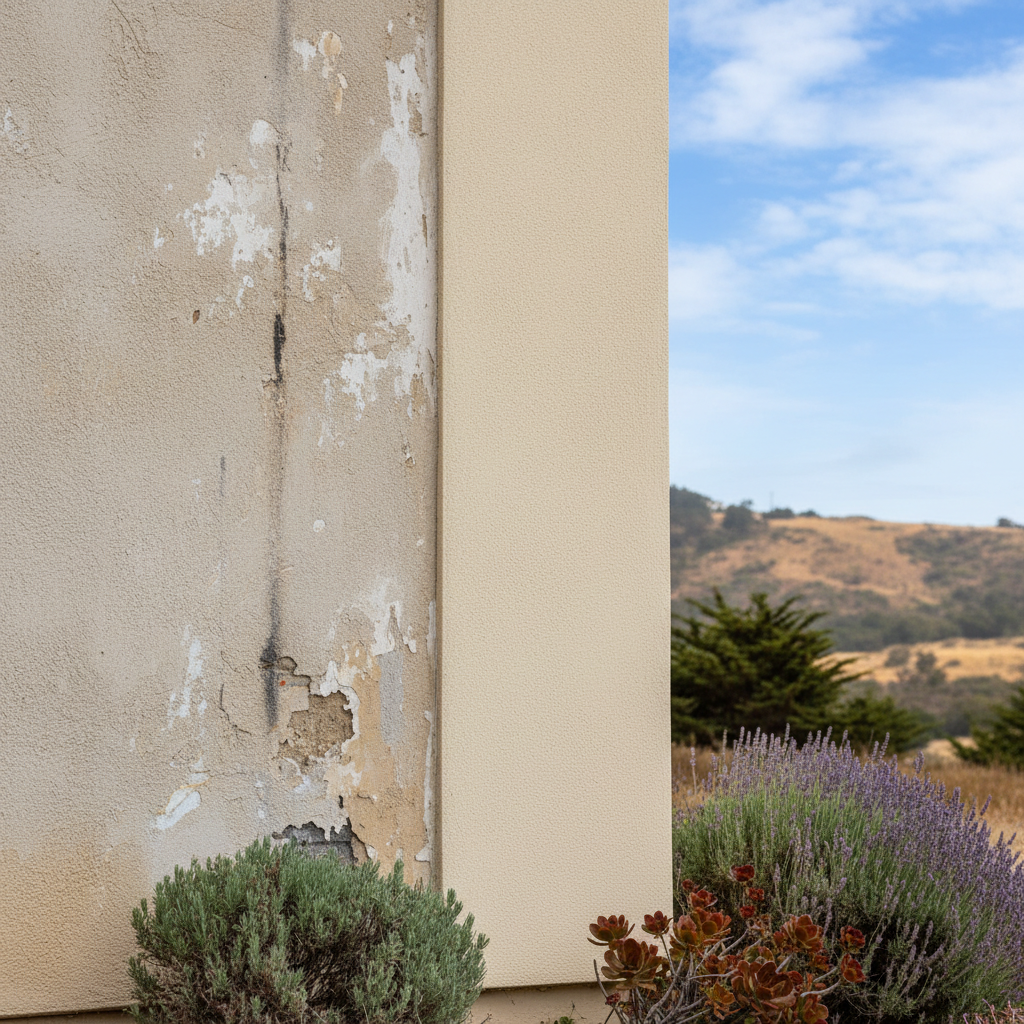
Alright, let's talk EIFS. You're probably looking at exterior insulation and finish systems for your home here in Monterey, and that's a smart move for energy efficiency and a really clean look. But it's not just 'EIFS' as one thing — there are two main ways to install it, and understanding the difference is crucial, especially with our damp, foggy mornings and those occasional heavy rains we get.
Barrier EIFS: The Original Approach
So, first up, you've got what's called Barrier EIFS. This is the older, original style. The idea here is pretty simple: it's designed to be a complete barrier against water. You've got your insulation board, usually expanded polystyrene (EPS), glued or mechanically fastened directly to your sheathing. Then, over that, comes a base coat with a fiberglass mesh embedded in it for strength, and finally, your finish coat. Think of it like a really thick, continuous raincoat for your house, you know?
The big selling point for barrier EIFS is usually the cost upfront. It's generally less expensive to install than its counterpart because it's a simpler system with fewer components. It also gives you that smooth, seamless look that a lot of folks like, and it's fantastic for insulation. That means lower heating bills, especially during those chilly winter nights we get around the peninsula.
But here's the rub, and it's a big one for places like Monterey. If water gets behind that barrier — and it can, through tiny cracks around windows, doors, or even just hairline fractures that develop over time — it's got nowhere to go. It gets trapped. And trapped water, especially in our climate where things can stay damp for a while, is a recipe for disaster. We're talking rot, mold, and serious structural damage that you might not even know about until it's a huge problem. I've seen some real nightmares from barrier EIFS that wasn't installed perfectly or maintained religiously.
Drainage EIFS: The Smarter Evolution
Now, let's talk about Drainage EIFS, sometimes called 'water-managed' EIFS. This is the newer, improved system, and frankly, it's what I recommend for almost every home around here, especially if you're building new or doing a full re-clad. The core idea is still insulation and a great finish, but it adds a critical layer of protection, which is pretty clever.
With drainage EIFS, you've got a continuous water-resistive barrier (WRB) directly over your sheathing, just like you'd use under stucco or siding. Then, there's a drainage mat or channels built into the back of the insulation board, creating a small air gap. If any water happens to get past the outer layers, it hits that WRB, runs down the drainage plane, and exits through weep holes at the bottom of the wall. It's designed to manage water, not just block it.
The cost for drainage EIFS is usually a bit higher upfront. You're adding materials and a bit more labor for that drainage plane and the detailing around openings. But believe me, that extra cost is a small insurance premium compared to the potential repair bills from a failed barrier system. Durability-wise, both systems are tough against impacts and weather on the surface, but drainage EIFS is exponentially more durable in the face of water intrusion.
Maintenance is key for both, but drainage EIFS is much more forgiving. You still need to keep an eye on sealants around windows and doors, clean the surface, and address any cracks promptly. But if a little water sneaks in, the drainage system is there to handle it, preventing it from sitting against your sheathing and causing rot. Appearance-wise, you can achieve the exact same beautiful finishes with either system — smooth, textured, whatever you like. You'd never know the difference just by looking at the finished wall, would you?
My Recommendation for Monterey Homes
Given our coastal environment, with the persistent fog, the occasional heavy rainstorms, and the general humidity, my recommendation is clear: go with Drainage EIFS. Period. The slight increase in initial cost is a small price to pay for the long-term protection it offers your home. You're building a house to last, and you need a system that can handle what Mother Nature throws at it, especially when it comes to water.
I've seen too many homes in places like Pebble Beach and Carmel Valley with barrier EIFS issues where water got trapped, leading to extensive damage. It's just not worth the risk. A properly installed drainage EIFS system, like the ones we put in at Oasis Stucco, gives you all the benefits of EIFS — incredible insulation, design flexibility, and a beautiful exterior — without the major vulnerability of trapped moisture.
When you're talking to contractors, make sure they understand the difference and are proposing a true drainage system, complete with a WRB, drainage plane, and proper flashing and weep details. Don't let anyone talk you into a barrier system just because it's cheaper. Your home is too important for that kind of shortcut.